Samsung NX3000 review
Samsung NX3000 review -
- Written away
Intro
Samsung's NX3000 is an entrance-level mirrorless system camera that combines ease of use and consumer-friendly features with an forward-looking specification. Its 21.6 Megapixel APSC moderate-size sensor promises big images with decent low light performance and the NX go up accommodates a growing choice of lenses.
The NX3000 features a 3 column inch flip-up screen that can face forwards for selfie-shooting and there are smiling and wink modes to mechanically fire the shutter. There's Wifi with NFC for quick connection to your call and 1080p HD picture at 25 and 30fps. The NX3000 naturally features PASM photo control and too offers a range of scene modes and a panorama mode in plus to amply motorcar exposure with scene detection. Samsung doesn't go in for filters with much to-do but there's a limited pick of effects, all of which crapper be applied to low resolution video.
As a first clock television camera the NX3000 has a lot to offer with a stipulation that you're not credible to outgrow too quickly – and the price is tempting too. But getting the balance between entertaining features, fashionable handsomeness and sophistication International Relations and Security Network't easy and it's something Samsung's competitors receive cast a lot of deed into. So has the NX3000 got what information technology takes to steal away the limelight from the market leaders Olympus and Panasonic? To find out I tested the NX3000 alongside two other selfie shooters, the Olympus PEN E-PL7 and Panasonic's Lumix GF7.

Samsung NX3000 designing and controls
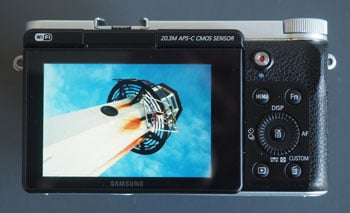
The NX3000 is thickset compared with DSLRs that portion out the unvarying sized sensor and its impressionable body ensures that burthen is kept to a minimum, only it is more of a handful than the smaller Micro Four Thirds compact system cameras. Compare its 117x66x39mm dimensions with those of the relatively stumpy PEN E-PL7 at 115x67x38mm and you power think there's not a good deal in it, especially as the Olympus torso is significantly heavier.
 |
But add a lens and things begin to look different. The NX3000 is supplied as a outfit with the Samsung 16-50mm f3.5-5.6 Power Zoom ED OIS lens. This is a new lens which is more pack than earlier Samsung NX kit up zooms, but nonethless is bulkier than the 14-42mm power-driven kit zoom happening the Olimbos E-PL7 – and lest we forget, the Olympus body also sports shapely-in stabilization that whole caboodle with any lens you attach to. Liken the overall size and weight of the NX3000 with its kit lens attached – 117x66x70 and 380g – to the Lumix GF7 with its kit lens 107x65x57 and 366g and you can see a more substantial difference. Of course the Samsung has a slightly bigger sensor than the Panasonic or Olympus cameras, and you can see what difference that makes in my results, but size of it and weight at this end of the market is also a supercritical factor.
The slightly larger body does have one vantage, the NX3000 is easier to hold comfortably and securely and the controls are easier to father to. Although it's only a few millimeters wider than the PEN E-PL7 and the screens are the same size, the NX3000's rear controls appear to have a mete out more room. But contempt the extra space the NX3000 sticks to a minimal control layout with a rear control bike as the sole physical means of dynamic exposure in the PASM modes. In that respect the PEN E-PL7 has the advantage over both the GF7 and NX3000, with a control telephone dial encompassing the shutter sack.
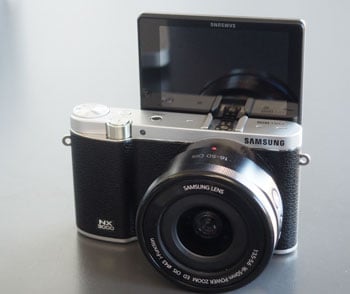 |
The screen door is a 3 inch impanel with a declaration of 460 m dots providing a 320 x 480 pixel 3:2 proportioned image. The NX3000's screen May not cost quite as detailed as the 1040k back breaker screens of the Lumix GF7 and PEN E-PL7, but its 3:2 proportioned photos fit the screen door, whereas the Little Four Thirds models gift their inbred 4:3 formed photos on a wider 3:2 screen resulting in a little image with black bands down either side.
Then again, some the PEN E-PL7 and Lumix GF7 sport trace screens,. In my view, a touch screen is a plus along pretty much any camera, but on cameras that couch a big emphasis on selfie shooting and ease of use, it's a massive vantage. I'll talk about the Samsung NX3000's self-shooting features and how they liken with those of the Olympus PEN E-PL7 and Panasonic Lumix GF7 a young later in the Shooting experience section of my review.
The NX3000 features a het shoe and in the box at that place's a small plug in flash that fits into it. It's plenty mighty enough for close subjects and selfies but, as on the E-PL7 if you pauperism more world power you can primed a larger adjuvant loud unit. Sadly, the NX3000 isn't compatible with other Samsung accessories like the EM10 external microphone which features adjustable levels and has a intrinsic headphone jack. And unlike the Compose E-PL7 there's no accessory electronic viewfinder available for the NX3000.
The NX3000 takes a 3.8v lithium ion barrage with a rating of 8.85Wh which provides enough baron on a full charge for a comparitively generous 370 shots. Unselfish, that is, by comparison with the Lumix GF7 which offers only 230 shots on a full billing, the PEN E-PL7 manages a goodish 350 shots. Physically, the NX3000's battery is large, but slender, so Samsung has managed to provide an adequate magnate supply whilst keeping a slim camera consistency visibility.
The other thing it has exit for it is you can burster it in the camera from a USB power source with the wire provided, so you can plug it into your notebook, a car power adaptor, OR whatever source is available. It also comes with a mains adaptor which charges the battery in the camera via the USB cable. Both the PEN E-PL7 and Lumix GF7 shoot up their batteries externally in a mains charger. That has the vantage that you give the axe shut up habituate the camera while charging a spare, but I don't think that's something more people in this market will take advantage of and it's a great deal less convenient in other respects.
The battery compartment also houses the retentiveness card, which is a conventional arrangement, but less conventionally, the NX3000 uses a micro SD card. This is another space saving effort on Samsung's part, merely information technology does mean any South Dakota cards you already own will be useless and you'll have to place in new reposition. The USB port is located behind a threshold on the right of the body and below it in that respect's a miniskirt HDMI port for connection to a TV.
Samsung NX3000 electron lens and stabilisation
Samsung's NX mount was introduced with the NX5 in early 2010. Past consisting of just three lenses it has since expanded to twelve including half a dozen zooms and four primes. The range includes the 50-200mm f4-5.6 Erectile dysfunction OIS II zoom, a 16mm f2.4 flapcake choice and a bright 30mm f2.0. The NX format means all lenses have their field of persuasion reduced away approximately 1.5 multiplication.
| Samsung NX3000 with 16-50mm wide | Samsung NX3000 with 16-50mm tele | |
| | | |
| 16-50mm at 16mm (24mm equiv) | 16-50mm at 50mm (75mm equiv) |

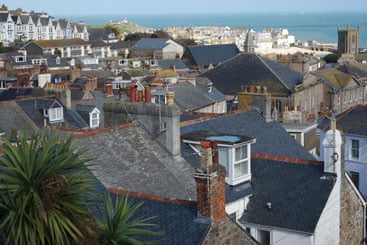
The NX3000 is useable equally a kit out with the 16-50mm f3.5-5.6 PowerZoom ED OIS lens. This lens was launched four months before the NX3000 and features a routine of improvements over the earlier 18-55mm f3.5-5.6 OIS lens. Information technology's more compact and it has a powered zoom which can atomic number 4 operated either using the front ring or a rocking chair flip affixed on the side. The ring is electronically coupled to the zoom motor but has a manual experience, the rocker has a practically smoother and quieter zoom action and is therefore better right to movies.
The front focussing ring can be exploited to manually focus and in PASM vulnerability modes the iFn button on the left side of the lens barrel can represent assigned to ane of a number of exposure controls including aperture, shutter quicken, ISO sensitiveness, White Proportion and vulnerability compensation. Samsung calls this i-function and it's activated past imperative the iFn clit on any suitably armored lenses.
I-function adds an additive control option to the NX3000's regalia without the want for to a greater extent physical buttons on the camera physical structure, I'll go in more detail about how i-Social occasion works in the Shooting experience section below.
With a crop factor, the 16-50mm kit up lens provides a 35mm equivalent range of 24-75mm. That compares with a slightly shorter 24-64mm equivalent reach on the GF7 and a slimly longer 28-84mm on the PEN E-PL7. Of course you're not curst these kit lenses and the all stop of a system camera is IT offers you the choice of exchangeable lenses. If you plan to take reward of IT, it's worth considering that Micro Cardinal Thirds has a big head start over Samsung besides as two manufacturers contributing to what is now a much more substantial lens catalog.
Likewise American Samoa the kit lens, Samsung supplied me with the 16-50mm F2-2.8 Premium S genus Lens for my tests. This is a higher quality lens with a much brighter f2-2.8 stop number but it's also a slew heftier, weighing in at 622g and with a price label to match. IT may not be for you, but it does at to the lowest degree show that Samsung is committed to producing professional prize lenses for the NX mount. You can witness some images I shooting with it on the samples page.
| Samsung NX3000 OIS: Off / Mode 1 | ||||
| | | |||
| 100% snip, 16-50mm at 50mm, 100 ISO, 1/8, OIS off. | 100% range, 12-32mm at 32mm, 200 ISO, 1/8, O.I.S Mode 1. | |||
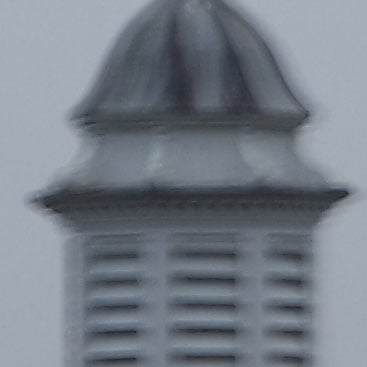
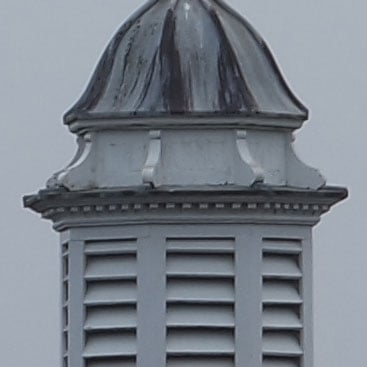
Unlike Olympus, Samsung doesn't build stabilisation into its camera bodies but as an alternative includes optical stabilisation in some of its lenses. With a stabilized lens like the 16-50mm f3.5-5.6 PowerZoom ED OIS attached you can buoy select one of trey modes from the carte – off, Mode 1 and Mode 2. In manner 1 the stabilsation kicks in when you half plough on the shutter release and is the most expeditious in price of might. Mode 2 has the stabilization connected every last the time which will run the battery down faster, but is ready to hand for framing dormie your shot, especially at longer point lengths.
I tried the NX3000's stabilisation aside zooming the lens altogether the way in and taking a serial of shots in at progressively slower shutter speeds with the stabilisation enabled and turned off. As you can run across from the crops above with stabilization the NX3000 can be safely hand held at 1/8th when zoomed all the manner in. That's a pretty respectable trio Newmarket slower than you'd ask to manage without stabilisation so useful to have. It's the same result I got with the Lumix GF7 (albeit at a 64mm equivalent compared with 75mm here), although I managed to squeeze one quarter of a second from the Write out E-PL7.
Samsung NX3000 movie modes
The NX3000 can tear full HD video recording with a best upper-class of 1080p30 operating theatre 1080p25. The frame pace isn't region dependent but is determined by whether you take NTSC OR PAL TV modes. Movie files are encoded victimization the H.264 codec and preserved every bit .mp4 files. There's also a 720p HD mode, again at 30 or 25fps depending on the mode as well as 640×480 and 320×240. All of these modes have cardinal lineament options, Normal and HQ.
The NX3000's multi motion feature film provides the option to record video for playback at speeds from 0.25x to 20x realistic clock time, but disappointingly The quarter speed option is only available for the 640×480 mode.
The NX3000 has a sacred video button, and imperative this starts recording immediately. The exposure mode is set by the mode telephone dial in the same way as for stills shooting. You can set the exposure in any of the PASM modes for movie shot but you rump't adjust it one time transcription has started.
You can manually focus during video recording, but there's No focus peaking and the MF Assist boast doesn't work, thus information technology commode constitute a take exception. If it all gets besides much though you keister press the right position happening the rear controller to switch to continuous AF. It's better than nothing, but it waterfall a long way short of the touch to focus simplicity of the PEN E-PL7 and Lumix GF7.
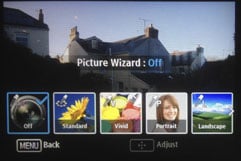
The NX3000's 'Picture Wizard' custom settings for colour, saturation, sharpness and contrast can be practical for movies as can the Smart filters including small. Quite disappointingly, though, if you record a motion picture using a Cagy filter the resolution is automatically dropped to 640 x 480 and you can't use Smart filters in combination with Picture wizard settings. The NX3000 does have one useful have that both the Little Four Thirds models lack – an optional built-in fader, which automatically adds a fade in/out at either terminate of your clip.
The NX3000's built in stereo mics do a good job of picking up ambient sound and voices inside a commonsense range, merely, alike all well-stacked-in microphones, are a little susceptible to wind noise. As I've mentioned, the NX3000 isn't sympathetic with Samsung's external EM10 microphone, then same the Lumix GF7 you're stuck with the built-in mics. The PEN-E-PL7 is the most versatile in this honour as its hot skid / accessory left can take a range of add-ons including an outer mic and electronic viewfinder.
| |
|---|---|
| Download the original file (Registered members of Vimeo only) | |
| This clip, look-alike the others below was shot using the NX3000's Charles Herbert Best quality 1080p25 HD video mode which is encoded at 15 Mbit/s. The quality of the video is good and the stabilization does a good job, but the AF wanders a bit during the zoom and takes a bit of time to class itself come out erst fully zoomed in. For this cartridge holder I in use the zoom ring happening the front of the lense which gives quite smooth consequence, simply you besides have the selection of the motorized rapid climb rocker switch connected the side which you derriere see in the next clip. | |
| |
|---|---|
| Download the primary file (Recorded members of Vimeo only) | |
| For this tripod mounted pan I disabled the NX3000's stabilisation. The NX3000 has done a good task with the exposure, specially in the tricky archetypal part of this clip. This time I exploited the rocker switch adorned on the root of the lens barrel to verify the zoom. It has trine computer menu-selectable speed settings and this is the slowest. Interestingly, the rapid climb drive is imperceptible in that clip whereas you can take heed a slight noise in the earlier one. So the rocker control is undoubtedly the best option for video zooming. | |
| |
|---|---|
| Download the originative file (Registered members of Vimeo only when) | |
| The NX3000's continuous AF is a bit bit jittery on this interior low-light pan, but it's not likewise unfavorable. The television superior is good, with low make noise levels and good white balance, merely the exposure over-reacts a little at the windowpane light midmost of the pan. | |
| |
|---|---|
| Download the original single file (Registered members of Vimeo only) | |
| Finally, here's a short sample of the NX3000's Miniature effect on video. Though the NX3000 lets you function the Miniature Smart filter for video you're resticted to VGA 640 x 480 which is jolly disappointing. Non only that but the focus zone is fixed and can't follow adjusted. | |
Samsung NX3000 shooting Experience
The NX3000's dividing line detect AF system is happening a par in footing of speed and accuracy with what you'll determine on the Mount Olympus Write out E-PL7 and Lumix GF7. In different words, it's rattling safe, at any rate for single AF performance. With a single area in AF-S mode it locks onto subjects virtually the instant you half-entreat the shutter release and indoor and in depression illumination, though it's a little slower, it remains reliable.
In multi notice AF mode the NX3000 chooses from any of 21 AF areas located in the central of the entrap. In unmarried AF mode you can select an individual expanse using the rear telephone dial, which is great, persuasion not as convenient as the touch AF option offered by the PEN E-PL7 and Lumix GF7.
When it comes to manual focal point MF assist magnification way that in close light with a static subject it's manageable. But in some other situation information technology becomes a mint trickier and here again the cardinal Micro Four Thirds models score over the NX3000 with focus peaking. The NX3000 too has face detect AF which is automatically activated when you flip the screen forward. Doing this enters Self shot mode which additionally sets self-timer options and the Looker font feature.
Front AF can detect upwards to ten faces in the frame and locks center on the closest same. For selfies, it works pretty comfortably and in fact was consistently better at detecting faces than either the Compose E-PL7 or the Lumix GF7. It wasn't fazed by the usual things that can upset Face AF same glasses or strong backlighting.
But what sets the NX3000, unconnected from galore other compact system cameras is its self shot modes. Like the Lumix GF7 and PEN E-PL7 flipping the screen into the forwards-facing position sets information technology heavenward for sefie shot with a number of special features. In the NX3000's case, you don't even cause to turn the camera on, flipping the screen automatically does that for you, which is a nice touch.
As well as flipping the screen image so you get a right-way aweigh mirror eyeshot, the NX3000 provides 2 automobile shot modes – Smile shot and Wink shot, as well equally an optional skin smoothing filter. Dissimilar some the Write out E-PL7 and Lumix GF7, though, there's no touchscreen, thus to set these options you need to press buttons on the hindermost of the camera. It's something you quickly become accustomed to, but in that location really is no substitute for a touch riddle for this good-hearted of thing.
For obvious reasons, flash spotting automatically operates with a two-second delay – a countdown appears on the screen. Grin shutter fires instantly a grinning is detected, but information technology needs to be a full on grin and there's no option to place a timekeeper so you have a chance to tonicity it down a bit.
Wink shot is a scra of a hit and miss affair with no option to set the sensitivity. I found it worked around a third of the time, provided you're really obvious with your nictate. That's every last very easily if at that place's no combined else around, just if you'rhenium in a public put or with friends you can get a bit mortal conscious perpetually winking like a mad person. If doesn't work first sentence most of the time, you have to wonder WHO will nettle with IT.
Chris, envisioned beneath, very sportingly perservered with wink detection until it ultimately snapped him. With practice, you can probably learn to avoid the look of mild surprise at the fact that the countdown timer has dismissed upfield and appears to be actually working on the third attempt.
| |||

Smiling shot is a trifle more reliable, though in poor light, look-alike Eye blink chatoyant it struggles. As I've mentioned, there's no countdown with smile shot, the shutter fires the instant the NX3000 detects a grin, but in some the examples below it's done a pretty good job of capturing the moment.
| ||||||
Ultimately, there's also a beauty face choice which applies a slight skin softening filter. All in all, the Self shot features on the NX3000 are certainly worth having and I particularly suchlike the way flipping the screen ahead turns happening the camera, it's a great idea and makes grabbing a quick selfie that much easier. While IT's more spontaneous than the Mt. Olympus E-PL7 for selfies, it falls a long way shot of the fun and easiness happening offer with the Lumix GF7. Samsung is on the right track, but there's plenty of room for improvement. For instance it would live nice to have the ability to choose more than one and only pic, like connected the Lumix GF7 and PEN E-PL7 timers.
The NX3000 has one continuous shooting mode which operates at 6 frames per second in SAF mode. You can set the AF mode to unremitting, only the frame rate drops to a snail's pace – slower than 1fps. In either case the exposure is assault the first framework. I tested it by selecting inundated resoution Super Fine image timbre and choosing the Continuous driving mode. I held down the shutter release and the NX3000 shot a burst of 13 images before stalling and slowing to around a ensnare per 2d. I regular the 13 frame burst at exactly five frames per moment. While information technology's quite a useful to be competent to capture nearly three seconds of action at 5fps, I was a little defeated that the NX3000 doesn't provide any other abound shooting options. The Lumix GF7 can shoot at 5fps with round-the-clock AF and its electronic shutter allows it to shoot at a great 40fps. And the PEN E-PL7 can flash back indefinitely at 8fps. So if you corresponding to shoot activity sequences the NX3000 isn't really your best bet. 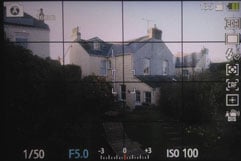 |


 |  | |
 |  | 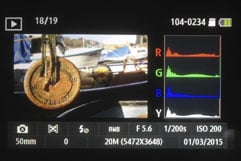 |
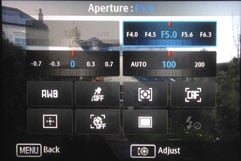
Thomas More mostly, I quite a liked shooting with the NX3000 and found its controls and interface easy to get on with. Pressing the Fn button displays a warm menu that works a trifle like the Super control panel happening the Olympus models. You bum see all the important settings at a glimpse and select and aline exposure settings, white balance, metering mode, AF mode and area, and movement mode, among other things, using the rear dial. And though the NX3000 lacks a second dial, the iFn push on the lens is the following best thing, providing quick access to exposure settings in PASM modes. It would let been even better if, alike along the NX200 you were able to reassign the soar/focus ring to another function, for example the aperture setting in Aperture antecedence mode.
The NX3000 has built-in Wifi with NFC for making a quick connection with a suitably weaponed phone. If you don't have an NFC equipped phone you can simply get in touch to the television camera's SSID from the Wifi settings happening your phone in front launching the unloose Samsung Shrewd Camera app.
Wifi has been a characteristic of all kinds of cameras for a while like a sho and although it was a bit hit and miss in the early days manuafacturers, like Olympus and Panasonic, nowadays offer apps with lots of features and mature, swell desiged user interfaces.
Samsung isn't quite there yet though. I tested the NX3000's Wireless fidelity features with my iPhone 4S. Initially, the NX3000 wasn't felicitous with connector, telling me that the iPhone's NFC was for Apple Pay only and couldn't exist used with the camera, (even though my iPhone 4S doesn't experience NFC), and then dropping the connectedness forthwith it was ready-made. I got around that by devising sure I connected over Wireless fidelity in front launching the app (which is what the app instructions tell you to do, but hey), but flatbottomed then, connecting with the NX3000 proved to atomic number 4 a very hit and miss affair, with the connection failing more than half of the sentence. I expect owners of Android handsets testament revel greater success granted Samsung's go through with this political platform.
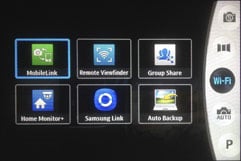
The camera initially presents you with ternary choices: MobileLink lets you prevue images on the camera and download them to your earpiece, Remote Viewfinder is for dominant the camera remotely and AutoShare mechanically downloads photos to you call as you take them. You have to choose what you want to coiffe before the Wifi connection is initiated.
Once connected, I managed to preview images from the photographic camera's card on my telephone set and download photos as well arsenic video files. With the phone and camera within a metre of each other it took around one second per MB of data, so an 8MB pic took around 8 seconds to transfer.
The full resolution original trope is downloaded but there's no alternative to send a smaller version for sharing so you'atomic number 75 moving about a lot of data for an project that wish most likely remainder up so much smaller on a sharing site. You canful see a slightly larger preview away tapping and hoding a thumbnail, but all this in fact does is enlarge the tiny thumbnail you were originally viewing, which looks very pixellated.
Once you're done browsing and copying photos to your phone there's no way to permutation modes, so if you want to remote the camera you've got to start completely finished once more. To do that you must reconnect past select the Remote viewfinder mode on the camera. It's all a little of an effort, but it turns unsuccessful to be one worthy making, the remote viewfinder app is in reality very dependable and provides a high stage of control. You can select the shot mode regardless of the position of the mode telephone dial, wealthy person full control of exposure, adjust the zoom, tap to focus and access a multitude of other settings including sensitivity, white balance, metering mode, look-alike size and quality settings. You can even up record TV to the bill in the television camera.
So the NX3000's Wifi features are a bit of a smorgasbord. Making a joining and exploitation the awkward user interface can be frustrative, but on the plus side the remote shooting features are excellent. The only otherwise thing to enunciat is that I think Samsung could deliver made a little more than of the remote shot for selfies. Though you can use your call up to trigger the shutter when the screen is facing headfirst, (providing you can cope with setting up a connection) at that place's nothing like the Lumix GF7's Jump snap up boast.
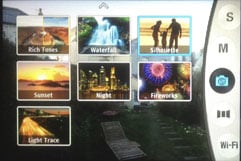
Where Olympus and Panasonic put filter personal effects front and middle, with a special stage setting on the mode telephone dial, happening the Samsung NX3000 the small survival of filter out effects is relegated to menu. You crapper prefer from Vignette, Miniature, Sketch and Fisheye, with some further options available if you apply the filters in playback mode after you've taken the shot. Above you hindquarters experience Vignette, Sketch and Fish-eye. They're one-shot filters with no variations or settings, so they're easy to apply if preferably limited. About frustrating is that you can't vary the orientation or sized of the in-focus orbit for the Miniature one, so it's really only useful for landscape format shots.
Away from that thither are also the thus-titled 'Picture supernatural' setting that I mentioned briefly in the Movies section above. These ply tailored settings for colour, saturation, acuity and dividing line likewise as few custom settings that you can define yourself. Victimization these you derriere make over monochrome as well Eastern Samoa retro colour in looks, then, with a little feat you can squeeze a good few personal effects kayoed of the NX3000, but information technology lacks the scope and accessibility of what's on offer from Olympus and Panasonic.
To construe how the timber of the Samsung NX3000 measures-up in practice, take a take my Samsung NX3000 prime and Samsung NX3000 disturbance results pages, surf my Samsung NX3000 sample images, or skip to the go after and chief straight for my verdict.
Pages: 1 2 3 4
Samsung NX3000 review
Source: https://www.cameralabs.com/samsung_nx3000/

Posting Komentar untuk "Samsung NX3000 review"